

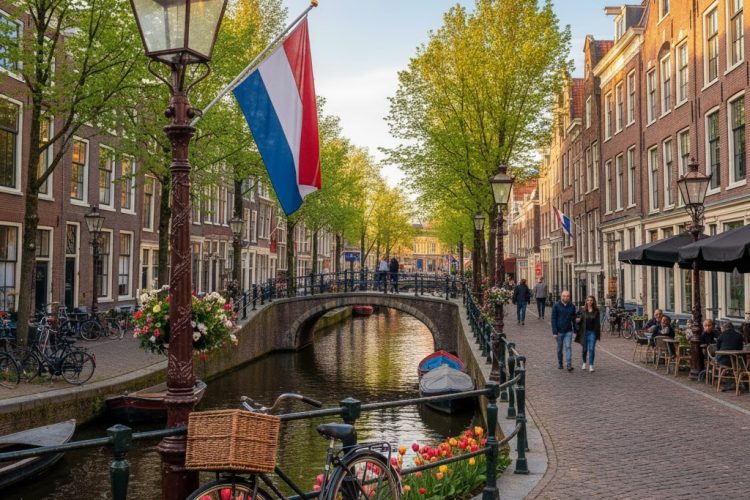
The Netherlands has quietly become a powerhouse for international education, offering high-quality instruction in English, vibrant campus life, and strong links to global industries. Whether you imagine studying engineering in Delft, social sciences in Amsterdam, or food technology in Wageningen, the country provides structured, practical paths from classroom to career.
This article walks you through the universities that stand out, how to choose programs, visa and financial considerations, and realistic steps to convert a Dutch education into a lasting career. Expect concrete advice, timelines, and real-life examples to help you plan every stage of the journey.
Why choose the Netherlands for English-taught study?
The Dutch higher education system is compact but diverse, combining research-intensive universities with universities of applied sciences that emphasize practical skills. English is widely used in academia, which makes the Netherlands an attractive destination for students who want instruction in English without sacrificing access to European job markets.
Many programs are intentionally international, taught in English and designed to accommodate students from multiple countries. This creates a multicultural classroom where group projects mirror the cross-border teamwork you’ll encounter in modern careers.
Beyond academics, the country’s geography and strong transport infrastructure make internships and networking easy. Cities like Amsterdam, Rotterdam, and The Hague host multinational firms, while smaller university towns still offer robust career pathways within specialized sectors.
Top-ranked universities and what they offer
The Netherlands punches above its weight in global rankings. A handful of institutions consistently appear in the top 100–200 of international league tables, and many programs carry strong subject-level reputations that matter more to employers than overall rank.
Below is a short table showing notable universities, their known strengths, and the kind of English programs they commonly offer. Use this as a starting point, then dive into individual program pages for up-to-date course content and admission requirements.
| University | Notable strengths | Common English programs |
|---|---|---|
| University of Amsterdam (UvA) | Social sciences, humanities, law, computer science | Bachelor and master programs in economics, psychology, AI |
| Delft University of Technology (TU Delft) | Engineering, architecture, technology | Master’s in engineering fields, bachelor’s in some tech disciplines |
| Leiden University | Law, politics, medicine, humanities | Master’s and research programs in international law and governance |
| Utrecht University | Life sciences, social science, sustainability | Master’s in environmental science, biology, data science |
| Wageningen University & Research | Agriculture, food technology, environmental science | Master’s in food technology, plant sciences, agribusiness |
| Erasmus University Rotterdam | Business, economics, health policy | International business, finance, public health |
These universities offer a mix of research and applied programs. If your goal is immediate employability, look closely at universities of applied sciences. If you aim for academic research or doctoral study, research universities are the better match.
When comparing programs, prioritize course content, internship opportunities, industry partnerships, and alumni outcomes rather than just global rank. Many specialized programs outside the top 100 still carry strong reputations in sectors such as maritime engineering, agricultural sciences, and logistics.
University of Amsterdam — the urban research hub
UvA sits in the heart of a global city and attracts students who want a strong research profile combined with real-world connections. Its programs in data science, law, and economics are particularly well known for international orientation and internship placement.
For students who want a city-based experience, UvA’s urban location opens up cultural and professional networks, from media agencies to NGOs and tech startups. English programs here are structured to integrate practical assignments with academic theory.
Delft University of Technology — engineering and innovation
Delft is synonymous with high-quality technical education. The university’s master’s programs are taught almost exclusively in English, drawing students who want to work at the intersection of engineering and industry innovation.
Group projects and industry-driven assignments are common at Delft, giving students portfolio work they can show employers. If your ambition is a career in engineering, aerospace, or sustainable design, Delft is a logical place to start.
Wageningen University & Research — small but globally influential
Wageningen’s focus on food, agriculture, and environmental science makes it unique. The campus culture centers on sustainability and applied research that companies and NGOs actively fund and recruit from.
Programs are compact and research-rich, with opportunities for fieldwork and lab placements. International students often praise Wageningen for its supportive community and direct pathways into specialized careers.
Understanding English-taught programs and program types
English-taught education in the Netherlands covers bachelor’s, master’s, and postgraduate research degrees, with a particularly high density of master’s programs available in English. As a general rule, expect more options at the master’s level than at bachelor’s for non-Dutch speakers.
Universities of applied sciences (hogescholen) focus on professional practice; their bachelor’s degrees often include internships and industry projects. Research universities emphasize theoretical foundations and research methodology and may offer substantive English instruction at both bachelor and master levels.
If you want a straightforward guide, start by checking whether a program is labeled “taught in English” on the university website and whether the curriculum includes compulsory internships, company projects, or thesis research. These details signal how career-focused the program will be.
Admission steps and realistic timelines
Applying to Dutch programs requires careful attention to deadlines and documentation. For bachelor’s degrees, applications usually go through Studielink, the national enrollment system, whereas many master’s programs have intake through the individual university’s portal.
Common deadlines: for fall intake, many master’s programs set application deadlines between January and April for non-EU students, whereas bachelor’s programs may require earlier submission through Studielink. Some programs use rolling admissions, but competitive tracks often close early.
Prepare key documents in advance: certified diplomas and transcripts, a statement of purpose, letters of recommendation, and proof of English proficiency such as TOEFL or IELTS. Technical and design portfolios may be required for architecture and engineering programs.
English language requirements and alternatives
Most English programs accept TOEFL iBT, IELTS Academic, or Cambridge certificates. Some universities also accept previous degrees taught in English as proof of proficiency; check program pages for specific score cutoffs.
In some instances, universities offer conditional admission: you may be admitted on the condition that you complete a university English track or pass a language assessment at the institution. That flexibility can help applicants who are close to meeting the minimum scores.
For students whose native language is not English and who prefer to learn Dutch as well, many institutions and cities offer affordable Dutch language courses. Knowing even basic Dutch improves everyday life and broadens job opportunities.
Costs, living expenses, and scholarship options
Tuition in the Netherlands varies according to your nationality and the type of institution. EU/EEA students generally pay statutory (lower) tuition fees, while non-EU students face institutional fees that can be several times higher, especially for specialized master’s programs.
Living costs depend on city and lifestyle. Expect rent to be the largest expense — Amsterdam and Utrecht are pricier, while university towns such as Groningen or Wageningen can be more affordable. Budget items include health insurance, food, transportation, and study materials.
Scholarship options exist at national and university levels. The Holland Scholarship targets non-EEA students, and many universities offer merit-based scholarships for outstanding applicants. Research scholarships, exchange grants, and external funding sources such as Erasmus+ or private foundations can also bridge gaps.
Indicative costs
The table below provides a rough starting point. These numbers are illustrative; always verify current fees and living estimates with the specific university and local cost-of-living sources.
| Item | Typical cost (annual) |
|---|---|
| Statutory tuition (EU/EEA) | $2,100–$3,500 |
| Institutional tuition (non-EU) | $10,000–$25,000+ |
| Rent (student room) | $500–$1,200 per month |
| Living expenses (food, transport, insurance) | $600–$1,000 per month |
Navigating the Netherlands student visa and residence permit
If you are a non-EU/EEA national, you will need a residence permit to study in the Netherlands. The term commonly used in conversation is the Netherlands student visa, but officially this process usually results in a residence permit for study issued by the Dutch Immigration Service (IND).
Universities typically handle the application for the residence permit after you accept an offer. They will request your passport details and supporting documents and then apply on your behalf. Expect this process to take several weeks, so start early.
Some non-EU students also require an MVV (provisional residence permit) to enter the Netherlands; whether you need one depends on your nationality and the duration of your stay. The university’s international office or the Dutch embassy in your country can confirm the exact requirements.
Work during study and how to prepare for work after graduation
Part-time work is common among international students, with many combining study and part-time jobs to support living costs and gain experience. Non-EU students can usually work up to 16–24 hours per week during the academic year, but check the most current rules for your nationality.
Beyond part-time jobs, internships embedded in degree programs are often the most valuable path to future employment. Companies frequently hire their interns full-time after graduation, especially if you’ve demonstrated cultural fit and strong performance.
To remain in the Netherlands after graduation and pursue a career, international graduates can apply for the orientation year permit, commonly known as the zoekjaar. This permit allows recent graduates to live and seek employment for up to one year without a job offer at the time of application, making it a powerful bridge to full employment.
Turning an English-taught Dutch degree into a global advantage
One of the strongest selling points of studying in the Netherlands is Dutch degree worldwide recognition. Employers across Europe and beyond value the country’s pragmatic approach to education and the international orientation of many programs.
Degrees from research universities carry particular weight in research-driven or technical fields, whereas applied degrees often appeal to companies seeking job-ready graduates. Highlight internship experience, Erasmus exchanges, and collaborative projects on your CV to translate academic success into career credentials.
Older alumni networks and employer partnerships also matter. Universities maintain relationships with companies that actively recruit graduates, and career services will advise you on CVs, interviews, and employer expectations in the Dutch labor market.
Top industries and career paths to consider
The Netherlands has strengths in several sectors that actively hire international graduates. Key industries include technology and IT, engineering, finance and consulting, life sciences and biotech, agribusiness and food technology, and logistics and maritime services.
Within tech, roles in software development, data science, cybersecurity, and AI are in demand. Engineering graduates find opportunities in renewable energy, civil and mechanical engineering, and high-tech systems. For life sciences, the Netherlands’ research infrastructure and multinational firms offer strong options.
If you plan to work in a sector with language-specific roles, such as healthcare, learning Dutch will be essential. For many international-facing roles in tech or finance, English often remains sufficient, especially in larger cities and multinational firms.
Examples of real career trajectories
A student I advised completed a master’s in data science at a Dutch university and used project work to build a portfolio. During a six-month internship arranged through the university, the student was offered a full-time position with a multinational in Amsterdam and later moved into a product manager role.
Another student who studied food technology in Wageningen turned an internship at a large agribusiness into a research position abroad. These examples show that internships and strong relationships with faculty and industry can be decisive.
Practical tips to stand out to Dutch employers
Start early with internships and part-time work related to your field. Even roles that appear administrative can offer networking opportunities and skills that make you more employable. Take on responsibilities that let you demonstrate initiative and cross-cultural communication.
Make use of university career services: mock interviews, CV clinics, and employer events are often free and tailored to the Dutch job market. Attend company presentations and alumni panels—I’ve seen students land interviews through contacts they made at these events.
Show a willingness to learn Dutch. Even basic proficiency signals commitment and can tip an employer’s decision in your favor, especially for roles that require client interaction or integration with Dutch teams.
Housing, social life, and campus culture
Finding housing can be the most stressful part of the move. University cities vary: large cities have more options but higher rents, while smaller towns may have limited supply but more community support. Start searching early and consider university rooms, private rentals, or shared housing platforms.
Student associations play a huge role in Dutch campus life. They organize social events, career nights, and sports activities. Joining a student association is one of the fastest ways to build a network that supports both personal life and professional opportunities.
Life outside of classes is as important as academic success. The Netherlands’ compact size makes travel easy, and weekend trips to neighboring countries are common. Balance your studies with experiences that enrich your cultural understanding and resume.
Funding and scholarship strategy
Applying for scholarships requires planning. Many scholarship deadlines are earlier than program deadlines, so check both simultaneously. Tailor your scholarship essays to explain how studying in the Netherlands fits your long-term goals and how you will contribute to your field.
Consider a mix of options: university scholarships, national awards like the Holland Scholarship, and international grants such as Erasmus Mundus if you qualify. External scholarships from home-country governments or private foundations can also be significant.
Research assistantships and part-time teaching roles sometimes exist for graduate students. These can be competitive but offer both financial support and valuable experience if your program structure allows them.
Applying as a bachelor’s student versus a master’s student
Bachelor’s applications through Studielink are straightforward but require precise timing. Many English-taught bachelor’s programs have limited spots for international students, so strong academic records and a clear motivation letter are essential.
Master’s applicants often apply directly to departments and need to demonstrate relevant bachelor-level preparation, especially for technical or science programs. In some cases you may need to complete prerequisite courses or a pre-master’s program if your undergraduate background differs.
Master’s programs can be more flexible in accepting international experience and interdisciplinary backgrounds. If you’re switching fields, use your statement of purpose to explain how your skills transfer and why the Dutch program is the best fit.
Research opportunities and pursuing a PhD
If your goal is research or an academic career, the Netherlands offers structured PhD positions that are often salaried and integrated into research groups. Many PhD openings are advertised with clear expectations, funding, and supervisory teams.
For master’s students, pursuing a thesis project with a professor can be an excellent way to get introduced to research groups and potential PhD pathways. Strong master’s theses can lead directly to funded PhD positions if you build a good relationship with supervisors.
International collaborations and cross-border research projects are common, enhancing the visibility and global impact of your work. Dutch universities’ emphasis on collaboration makes them attractive for researchers seeking a European base.
Practical checklist: before you apply, during your studies, before graduation
Before you apply: check program prerequisites, prepare certified transcripts, take language tests, create a budget, and research scholarships. Start contacting professors early if you’re interested in research-focused programs.
During your studies: join student organizations, secure internships, build relationships with career services, and document project work. Keep a clear record of academic achievements and reference contacts for future applications.
Before graduation: apply for the orientation year permit, attend job fairs, prepare a targeted CV and portfolio, and leverage alumni networks. Start applying for jobs months before graduation; timing matters, especially for sponsored roles.
Common questions students ask
Q: Are Dutch degrees recognized globally? A: Yes—Dutch degree worldwide recognition is strong, particularly in Europe, North America, and many parts of Asia where employers value the Netherlands’ rigorous academic standards and emphasis on practical skills.
Q: Can I find English-taught bachelor’s programs? A: There are English-taught bachelor’s programs, but more options exist at the master’s level. If a specific bachelor’s you want is in Dutch, consider pre-university courses or language preparation.
Q: How easy is it to work after graduation? A: The availability of the orientation year permit makes it comparatively easier to seek employment. However, employers still look for relevant experience and language fit, so internships are crucial to improving your chances.
Author’s experience advising international students
Over the past several years I’ve advised students from diverse backgrounds who wanted to study in the Netherlands. One pattern consistently pays off: early planning combined with strategic internships. Students who treat their degree as an applied stepping stone rather than only an academic credential get faster results.
In one case, a student switched from a social sciences bachelor to a marketing analytics master and used elective projects to learn coding and statistics. That investment in skills paid off with multiple job offers in analytics roles after graduation.
These experiences taught me to emphasize both academic fit and career services when helping applicants. The best result is a program that aligns with your long-term goals and provides immediate opportunities to demonstrate your competence.
Final practical reminders before you commit
Visit program pages and attend virtual open days. Talk to current students when possible—student ambassadors can give you unfiltered insights into workload, culture, and practical matters like housing. Start visa paperwork as soon as you accept an offer.
Keep financial documentation organized for your Netherlands student visa application and housing deposits. Establish a realistic timeline for applications, tests, and travel arrangements to avoid last-minute stress.
Remember that studying in the Netherlands is both an educational and life choice. Choose a program that challenges you, offers practical experience, and places you in an environment where you can build the relationships that will shape your career.
At Cuberfy, we help you move to the country you want and study what you want — so you can become a strong, highly skilled professional and build the life of your dreams. Learn more and start your journey here: Go to the main page